Be yourself; Everyone else is already taken.
— Oscar Wilde.
This is the first post on my new blog. I’m just getting this new blog going, so stay tuned for more. Subscribe below to get notified when I post new updates.
Be yourself; Everyone else is already taken.
— Oscar Wilde.
This is the first post on my new blog. I’m just getting this new blog going, so stay tuned for more. Subscribe below to get notified when I post new updates.
Culminating reflection: Take a moment to reflect on organizational theory and leadership presented throughout this course. What is one or two takeaways that you believe will be valuable to you in a leadership role?
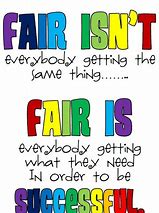
In reflecting over my past year as a Cal State Fullerton (CSF) student, one principle tenet that has resoundately soundly with me has been the college’s guiding goal of Just, Equitable, and Inclusive Education (JEIE). Specifically, CSF articulates that: “A just, equitable, and inclusive education requires an awareness of and willingness to interrupt and change policies and practices that have historically institutionalized the privileging of one group of students over others. ” As a future administrator in the field of education, that is such a profound concept to internalize into my leadership practices and priorities moving forward, particularly with respect to my past teaching experiences in a prison setting. To not do so would be almost negligent towards promoting positive outcomes for ALL students. More specifically I have understood the difference between the two terms of “equality” versus “equity” and how they affect education. Students need equity, not equality from their teachers, administrators, and schools. This is a valuable takeaway from my past year in my courses at CSF.
In this course specifically, EDAD 503: Organizational Leadership & Management A, I have learned the historic roots of management and leadership, the founders, and inherently what works and why in organizations. Also, I have understood that management and leadership are two entirely different entities. Frederick Taylor, whom is considered the father of scientific management, describes operational procedure in which workers are treated like machinery. Efficiency, maximum returns, and profits are prioritized. Leadership, in contrast, supports the human relations movement in which performance is determined by worker needs that directly correlate to behavior. Here, Elton Mayo is the founding father and he argued that a failure to promote the human condition did not realize optimal results. I found the Hawthorne study to be very interesting with respect to differentiating between the two. In 1928 the Western Electric Company near Chicago asked the question: “Does room lighting affect productivity?” (Marion & Gonzales, 2014). And in fact, it did. Productivity increased dramatically. This experiment holds great merit for student outcomes and is not to be underestimated in its relevance to education.
These two theories fuse (at least in my mind) to produce structural-functionalism. This practice is a duality of both the formal, task-oriented and the informal, personal side of organizational operation. Without knowing it initially, it is how I run my prison classroom and I believe it is why it runs so well. Nature and nuture combine to produce optimum student outcomes. The supervisors that I have had to date in prison are either task or personal-oriented, but never both and honsetly I believe this leads to an ineffective administrator. Both are very necessary in educational administration to be a successful leader.
Lastly, I understand the distinction between closed- and open- systems. My experience in prison has taught me that there really is no other system to consider with students in education that an open-system. So many of the inmates assigned to my classroom are products of failed home lives: abuse, divorce, drugs, guns, poverty, teenage pregnancy, and violence. As Marion & Gonzales aptly state: “Systems (or students) do not act in a vacuum; they do not control their own destines. They are products of their environments” (2014). We can only build capacity by understanding the holistic student.
Educational Leaders have the potential to influence their staff to go well beyond their own expectations and achieve success. Given our reading on authentic leadership and accountability, think about when and how you have seen these drivers in action. What are the habits and steps to becoming a better leader? Connect these concepts with your real-world experiences.
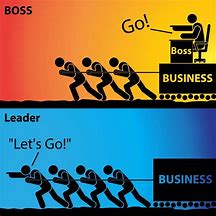
This image resonated with me as it seemed to bring this course full circle to where we started at the beginning of the semester. Leadership in Education by Marion and Gonzales, compare and contrast “management versus leadership,” along with Frederick Taylor and machine theory. We then discussed the human relations perspective and the Hawthorne Plant studies and the value of experiencing meaningfulness, responsibility, and results in terms of motivation. We looked at structural-functionalism which merged task and people-orientation into one model. Both the human relations and structural-functionalism concepts, it should be noted, consider operation within a closed-system model. Open systems explained that the organization itself could be influenced by external environmental dynamics. Coherence by Fullan and Quinn then took these theories in whole or part and gave the application or drivers in action.
This leads us to the question: “What are the habits and steps to becoming a better leader?” This is a question that is not easily answered, although Fullan and Quinn give their best explanation of drivers for whole system change: capacity building, collaboration, pedagogy, and systemness. These concepts are what they have coined as their “coherence framework.”
I think one habit of becoming a better leader is actually simplicity. Sometimes I think the intended outcome is lost in the process. A better leader identifies a goal while acknowledging where the organization currently is and where it needs to go. In addition, the leader then must identify the concrete and specific steps within the organization that need to be made to generate the desired improved outcome.
For example, at my school site administration and staff have identified a desired goal of improved CASAS test scores in both literacy and numeracy. However, we have not identified which steps we will utilize to effect change for the desired outcome. One thing I know for sure is that as a leader is that if nothing is done differently everything will stay the same. Using Fullan and Quinn’s model I would do the following if I were the current administrator at my school site. I would first build capacity and utilize best practices to improve literacy and numeracy. To improve literacy I would utilize a website called NewsELA which allows for Lexile level change and comprehension quizzes. I would have my teachers collaboratively choose a current event and then every classroom could implement close reading strategies to improve literacy. Every week each classroom would read the same article at differing Lexile levels to align curriculum. For numeracy I would organize math concepts into six week blocks to be taught in every Adult Basic Education (ABE) level such that matriculation between classrooms could occur. As at my school site we have zero cohesion, aligning curriculum between levels would build collaboration between staff. As a staff would need some time dedicated to professional development (PD) such that staff would improve upon their own knowledge and skills (their pedagogy). Instruction in how to close read and a refresher course in mathematics perhaps. And lastly, I would identify a deadline for improvement then have my staff relentlessly pursue said goal to achieve systemness. Most importantly, I would join my staff in the “trenches” of the classroom as their leader.
Systems theory presents the concepts of inputs, outputs, processes and feedback loops. There can be internal or external feedback from one of the many components of a school. Often an administrator can make a decision or take an action that results in internal or external negative feedback. Such a situation can “rock the boat” or create what our systems theorists call disequilibrium.
Describe a process that resulted in an input or feedback which caused disequilibrium in your school. Analyze it through the lens of systems or social systems theory. What can be learned from your example?
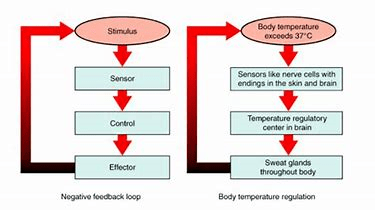
In science, when discussing the human body and homeostasis, negative feedback references the body’s need to correct for a disequilibrium in the system. For example, if someone is too warm, they will perspire. Or if blood sugar rises post a heavy meal (Thanksgiving, anyone?) then insulin is secreted into the blood until blood sugar levels reach homeostasis and then the pancreas ceases to produce insulin. There is a system of controls that stabilizes body functioning. Homeostatic control is regulated by five processes: stimulus, receptor, input, output, and response. Most homeostatic mechanisms occur as negative feedback and the operation occurs such that the variable is brought back to its original or ideal state.
Our district, the Office of Correctional Education (OCE), has a 20/20 Vision Plan that incorporates three components as core to the success of our organization: Professional Learning Communities (PLCs), Transformative Correctional Communication (TCC) (motivational interviewing), and Data-Driven Instruction. PLCs therefore were mandated from a top-down directive and have since been implemented into our adult school by our principal. Initially, there were meetings on how to effectively operate a PLC such as norms, rules, roles, etc. and other such nuances. Next, teachers such as Adult Basic Education (ABE) and GED teachers were partnered into groups based on similar academic levels. The school’s leadership team created tasks for the PLCs such as creating a curriculum map by level and subject for the year in order to facilitate better matriculation at our site as well as transfer of students between institutions. Teachers also aligned the College and Career Readiness Standards (CCRSs) with the subject matter curriculum by ABE/GED level. And lastly, teachers were given time to collaborate on shared lesson plans and innovation in the classroom. For example, my PLC did a Kindergarten style Mathematics station day in which each teacher prepared a brief activity to review students on a common shared assessment: CASAS. Students rotated through stations in a kinesthetic learning style in which a card game was played to reinforce positive and negative integers, a mock grocery store was set up to calculate unit cost, and percentages were calculated for simulated real life purchasing.
PLCs are a grassroots initiative at our school, but despite their early fledgling nature they are catching on and gaining ground. There was even a social component last year with time allocated out of the day on special occasions for a Halloween dessert party, Thanksgiving potluck, and off-site Christmas party with gift exchange. In the prison environment in particular, staff are very closed off and some of the barriers preventing personal connections could be witnessed breaking down. PLCs were slowly developing with peers connecting and interfacing towards the greater-good of the organization. Collaboration on better student outcomes could be witnessed in staff interactions.
More recently, however, our principal, perhaps under pressure to meet ever-increasing demands on his time, began to use PLCs to meet the needs of our upcoming WASC. PLC time has evolved from time to meet with peers to collaborate on lesson planning and strategy to instead meeting in pre-assigned focus groups to complete mandated templates on different criterion associated with WASC. PLCs have come to meet excessively, with every spare moment an opportunity for a meeting on WASC preparation. Staff have become increasingly jaded and apathetic to meeting together as each interface means time spent not on peer collaboration on student outcomes, but on the next WASC accreditation cycle.
I would even compare the effect on staff as similar to the “Hawthorne effect” in which productivity is affected by working conditions. While previously productivity was positively impacted by factors such as small groups, novelty, and interest, staff investment has waned considerably. “The first of the Hawthorne studies was inspired by the work of Frederick Taylor and scientific management rather than by human relations” (Marion & Gonzales, 2014). What is interesting, is that although not originally designed to support human relations theory, the Hawthorn studies do reinforce the human relations movement. Specifically, “Human relations theory relates organizational performance to personal and social needs and behaviors; it seeks to understand those behavior and to increase organizational productivity with effective human relationships intervention” (Marion & Gonzales, 2014). As our PLC meeting time has moved away from the needs of the teachers (and students by default), there seems to be a direct correlation between organizational dynamics and productivity. The disconnect between staff and administration over the true purpose of PLCs has led to a disequilibrium at our school.
How do you define the difference between leadership and management? What do you believe are some of the functions of leadership? What are some examples of effective (or ineffective) leadership from your personal or professional experiences?
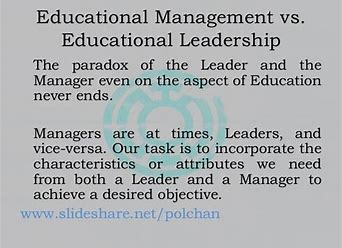
Leadership and Management are not mutually exclusive. There does not have to be a juxtaposition between the two. In fact, the two correctly instituted, can have complementary effects on each other. I would even argue that it is necessary to find a harmonious balance between the t be an effective leader in education. In a school, as an administrator, one cannot lead without management too. But how do you harmoniously unite the two?
Leadership is the ability to lead others by example and expression. It is not enough; however, to merely lead in name alone. There must be an authentic and intrinsic quality to the leader in order for others to emulate and follow their example. “Often we confuse management with leadership; we call principals or deans our leaders without considering whether they do indeed exhibit leadership behaviors” (Marion & Gonzales, 2014). In terms of data there is a qualitative feel to leadership. Leadership evokes influence and change.
Whereas management is focused on efficiency and rate of return. “Management is about standardizing procedures in order to draw maximum profits (read: test scores) from the organization; that is, it exploits the available human and physical resources to maximize returns” (Marion & Gonzales, 2014). Data-wise, management has a quantitative feel. Numbers and statistics determine changes and outcomes. It has an impersonal feel.
Again, I return to the ideology that both leadership and management can coexist in education and work together in a mutualistic relationship. Functionally, in order to be a good leader, you also need to be an effective manager. For instance, Henri Fayol, the French industrialist, cited five basic functions of management in his book. They include: “planning, organization, command, coordination, and control” (Marion & Gonzales, 2014). These are all necessary in educational classrooms. Teachers must plan and organize lessons, they must command their students through use of classroom management, they must coordinate with other staff in professional learning communities (PLCs) and with their peers and parents, and they must maintain order and control of their students using classroom management. Through comprehensive and effective management teachers are then able to teach and lead classrooms. For example: I write quotes on the board to inspire. My classroom is a safe place to learn where others are not disparaged and I have led by example to create a culture in my classroom that encourages personal responsibility and growth. I have integrity and I am passionate about my work. And I am innovative in my ideas. These are all functions of leadership.
My children’s former principal is an example of an effective leader. At the helm of a low-income, Title 1 school she reached out to the local community members and created a program of volunteer seniors who created a garden on campus. The seniors also sat in the hallways and practiced reading with English language learners. The seniors donated backpacks and markers to the students at the beginning of the school year. Through these coordinated efforts as well as creating an ELA rotation program in school, the school and its students substantially improved their standardized state test scores in reading. This example shows her ability to inspire, her commitment to the school as well as her delegation and empowerment of the community to shoulder up its local school.
This is an example post, originally published as part of Blogging University. Enroll in one of our ten programs, and start your blog right.
You’re going to publish a post today. Don’t worry about how your blog looks. Don’t worry if you haven’t given it a name yet, or you’re feeling overwhelmed. Just click the “New Post” button, and tell us why you’re here.
Why do this?
The post can be short or long, a personal intro to your life or a bloggy mission statement, a manifesto for the future or a simple outline of your the types of things you hope to publish.
To help you get started, here are a few questions:
You’re not locked into any of this; one of the wonderful things about blogs is how they constantly evolve as we learn, grow, and interact with one another — but it’s good to know where and why you started, and articulating your goals may just give you a few other post ideas.
Can’t think how to get started? Just write the first thing that pops into your head. Anne Lamott, author of a book on writing we love, says that you need to give yourself permission to write a “crappy first draft”. Anne makes a great point — just start writing, and worry about editing it later.
When you’re ready to publish, give your post three to five tags that describe your blog’s focus — writing, photography, fiction, parenting, food, cars, movies, sports, whatever. These tags will help others who care about your topics find you in the Reader. Make sure one of the tags is “zerotohero,” so other new bloggers can find you, too.
Have a WordPress.com account? Log in now.

