Systems theory presents the concepts of inputs, outputs, processes and feedback loops. There can be internal or external feedback from one of the many components of a school. Often an administrator can make a decision or take an action that results in internal or external negative feedback. Such a situation can “rock the boat” or create what our systems theorists call disequilibrium.
Describe a process that resulted in an input or feedback which caused disequilibrium in your school. Analyze it through the lens of systems or social systems theory. What can be learned from your example?
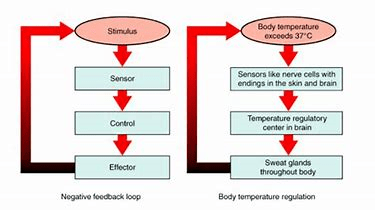
In science, when discussing the human body and homeostasis, negative feedback references the body’s need to correct for a disequilibrium in the system. For example, if someone is too warm, they will perspire. Or if blood sugar rises post a heavy meal (Thanksgiving, anyone?) then insulin is secreted into the blood until blood sugar levels reach homeostasis and then the pancreas ceases to produce insulin. There is a system of controls that stabilizes body functioning. Homeostatic control is regulated by five processes: stimulus, receptor, input, output, and response. Most homeostatic mechanisms occur as negative feedback and the operation occurs such that the variable is brought back to its original or ideal state.
Our district, the Office of Correctional Education (OCE), has a 20/20 Vision Plan that incorporates three components as core to the success of our organization: Professional Learning Communities (PLCs), Transformative Correctional Communication (TCC) (motivational interviewing), and Data-Driven Instruction. PLCs therefore were mandated from a top-down directive and have since been implemented into our adult school by our principal. Initially, there were meetings on how to effectively operate a PLC such as norms, rules, roles, etc. and other such nuances. Next, teachers such as Adult Basic Education (ABE) and GED teachers were partnered into groups based on similar academic levels. The school’s leadership team created tasks for the PLCs such as creating a curriculum map by level and subject for the year in order to facilitate better matriculation at our site as well as transfer of students between institutions. Teachers also aligned the College and Career Readiness Standards (CCRSs) with the subject matter curriculum by ABE/GED level. And lastly, teachers were given time to collaborate on shared lesson plans and innovation in the classroom. For example, my PLC did a Kindergarten style Mathematics station day in which each teacher prepared a brief activity to review students on a common shared assessment: CASAS. Students rotated through stations in a kinesthetic learning style in which a card game was played to reinforce positive and negative integers, a mock grocery store was set up to calculate unit cost, and percentages were calculated for simulated real life purchasing.
PLCs are a grassroots initiative at our school, but despite their early fledgling nature they are catching on and gaining ground. There was even a social component last year with time allocated out of the day on special occasions for a Halloween dessert party, Thanksgiving potluck, and off-site Christmas party with gift exchange. In the prison environment in particular, staff are very closed off and some of the barriers preventing personal connections could be witnessed breaking down. PLCs were slowly developing with peers connecting and interfacing towards the greater-good of the organization. Collaboration on better student outcomes could be witnessed in staff interactions.
More recently, however, our principal, perhaps under pressure to meet ever-increasing demands on his time, began to use PLCs to meet the needs of our upcoming WASC. PLC time has evolved from time to meet with peers to collaborate on lesson planning and strategy to instead meeting in pre-assigned focus groups to complete mandated templates on different criterion associated with WASC. PLCs have come to meet excessively, with every spare moment an opportunity for a meeting on WASC preparation. Staff have become increasingly jaded and apathetic to meeting together as each interface means time spent not on peer collaboration on student outcomes, but on the next WASC accreditation cycle.
I would even compare the effect on staff as similar to the “Hawthorne effect” in which productivity is affected by working conditions. While previously productivity was positively impacted by factors such as small groups, novelty, and interest, staff investment has waned considerably. “The first of the Hawthorne studies was inspired by the work of Frederick Taylor and scientific management rather than by human relations” (Marion & Gonzales, 2014). What is interesting, is that although not originally designed to support human relations theory, the Hawthorn studies do reinforce the human relations movement. Specifically, “Human relations theory relates organizational performance to personal and social needs and behaviors; it seeks to understand those behavior and to increase organizational productivity with effective human relationships intervention” (Marion & Gonzales, 2014). As our PLC meeting time has moved away from the needs of the teachers (and students by default), there seems to be a direct correlation between organizational dynamics and productivity. The disconnect between staff and administration over the true purpose of PLCs has led to a disequilibrium at our school.

