Educational Leaders have the potential to influence their staff to go well beyond their own expectations and achieve success. Given our reading on authentic leadership and accountability, think about when and how you have seen these drivers in action. What are the habits and steps to becoming a better leader? Connect these concepts with your real-world experiences.
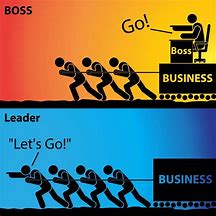
This image resonated with me as it seemed to bring this course full circle to where we started at the beginning of the semester. Leadership in Education by Marion and Gonzales, compare and contrast “management versus leadership,” along with Frederick Taylor and machine theory. We then discussed the human relations perspective and the Hawthorne Plant studies and the value of experiencing meaningfulness, responsibility, and results in terms of motivation. We looked at structural-functionalism which merged task and people-orientation into one model. Both the human relations and structural-functionalism concepts, it should be noted, consider operation within a closed-system model. Open systems explained that the organization itself could be influenced by external environmental dynamics. Coherence by Fullan and Quinn then took these theories in whole or part and gave the application or drivers in action.
This leads us to the question: “What are the habits and steps to becoming a better leader?” This is a question that is not easily answered, although Fullan and Quinn give their best explanation of drivers for whole system change: capacity building, collaboration, pedagogy, and systemness. These concepts are what they have coined as their “coherence framework.”
I think one habit of becoming a better leader is actually simplicity. Sometimes I think the intended outcome is lost in the process. A better leader identifies a goal while acknowledging where the organization currently is and where it needs to go. In addition, the leader then must identify the concrete and specific steps within the organization that need to be made to generate the desired improved outcome.
For example, at my school site administration and staff have identified a desired goal of improved CASAS test scores in both literacy and numeracy. However, we have not identified which steps we will utilize to effect change for the desired outcome. One thing I know for sure is that as a leader is that if nothing is done differently everything will stay the same. Using Fullan and Quinn’s model I would do the following if I were the current administrator at my school site. I would first build capacity and utilize best practices to improve literacy and numeracy. To improve literacy I would utilize a website called NewsELA which allows for Lexile level change and comprehension quizzes. I would have my teachers collaboratively choose a current event and then every classroom could implement close reading strategies to improve literacy. Every week each classroom would read the same article at differing Lexile levels to align curriculum. For numeracy I would organize math concepts into six week blocks to be taught in every Adult Basic Education (ABE) level such that matriculation between classrooms could occur. As at my school site we have zero cohesion, aligning curriculum between levels would build collaboration between staff. As a staff would need some time dedicated to professional development (PD) such that staff would improve upon their own knowledge and skills (their pedagogy). Instruction in how to close read and a refresher course in mathematics perhaps. And lastly, I would identify a deadline for improvement then have my staff relentlessly pursue said goal to achieve systemness. Most importantly, I would join my staff in the “trenches” of the classroom as their leader.

